What you need to know about a wood-burning stove's output
A wood-burning stove is no longer just a necessary source of heat, as it was in the old days. It has become a symbol of cosiness, light and warmth in the dark months, and a natural gathering point in the home. The gentle crackle and dancing flames behind the glass can be soothing and almost meditative, whether the stove is in your holiday home or your own living room. It is worth finding out how much a wood-burning stove can, or should, heat, so that you don't end up overheated, or freezing because the stove is the wrong size. Read on to learn more about how to find the right size of wood-burning stove for your home.
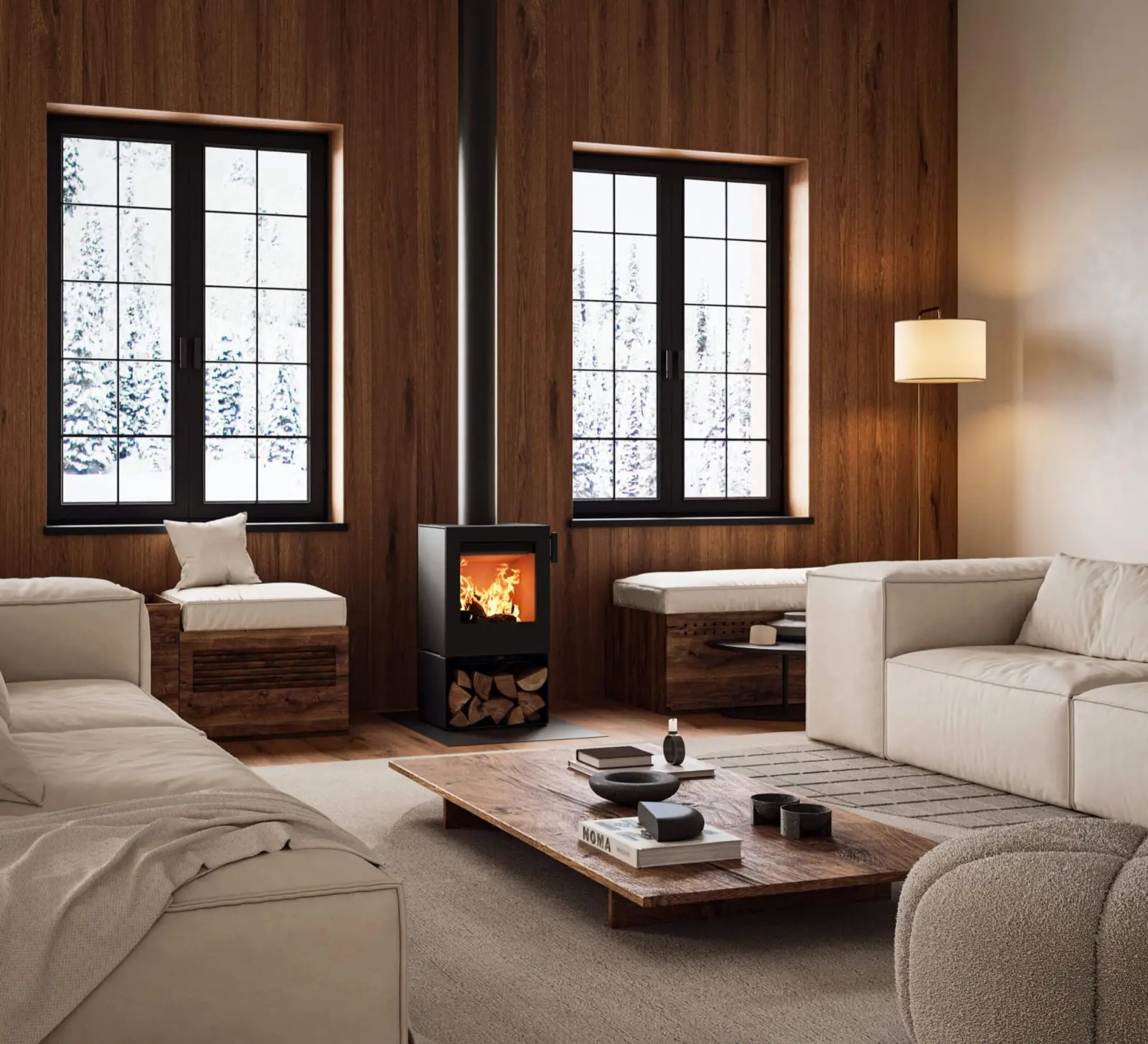
What to consider before buying a wood-burning stove
Of course, you will want to think about design and aesthetics. But these are actually the last things you should decide on. First, the following points should be assessed and looked into, so that you find the right size of wood-burning stove for you and your home or holiday home:
- Primary or secondary heat source. Will your wood-burning stove be the main source of heating for the whole home, or will it supplement district heating or a heat pump?
- The area to be heated. Will the stove be in a smaller or a larger home? And how much of the space should it help to heat? It is important to find exactly the right size of stove here, as a stove that is too large burns less efficiently. This leads to more soot in the stove's combustion chamber and on the front glass, if you choose a stove with a glass door. That means extra cleaning and generally more maintenance, which is entirely unnecessary if you choose the right size of wood-burning stove.
- Nominal output and operating range. The operating range of a wood-burning stove is measured in kilowatts (kW). The following list is a guide to nominal output and can give you an idea of what your new wood-burning stove needs to deliver to work optimally for you and your home:
- Nominal output of 2-6 kW heats approx. 30-100 m²
- Nominal output of 3-7 kW heats approx. 40-140 m²
- Nominal output of 4-9 kW heats approx. 50-160 m²
- Nominal output of 6-11 kW heats approx. 70-180 m²
- Nominal output of 5-15 kW heats approx. 120-210 m²
- The stove's external dimensions and clearance requirements. It may go without saying, but you need to take the rest of the room's layout into account when choosing your new wood-burning stove. This applies especially if it is going to replace an old one. It is also important to be aware of the safety distance to any other combustible materials in the room where you want the stove to stand.
The safety distance can vary depending on brand and design, so it can be a little tricky to work out what suits you best. If you find it hard to see which solution is best for you, it may be a good idea to contact a professional.
- The stove's combustion chamber and internal dimensions. The internal dimensions of a wood-burning stove have a great influence on its capacity. They also help determine how large the pieces of firewood can be. They can also affect how big a flame picture you get once the fire is dancing and the cosiness (hopefully) spreads.
Does any of the above seem daunting or difficult to work out? If so, you can contact a professional and let them guide you towards the best wood-burning stoves for you.

A tall pane of glass gives a large view of the flames – and plenty of atmosphere.
Which type of stove is best for you and your home?
Once you have the practical details sorted, such as size, nominal output and the rest, the more enjoyable part of the search for the perfect wood-burning stove begins: which type of stove should you choose? There is a little more freedom of choice between the different types of wood-burning stove here, as long as they meet the requirements that apply to the stove in question.
Freestanding wood-burning stove
The classic wood-burning stove – and the most popular – is the freestanding one. It comes in many different designs and sizes. This type of wood-burning stove creates a lovely atmosphere of calm and homely cosiness when it stands in your living room and you can watch the fire blaze behind the glass. One of the practical advantages of this type of stove is that there is often room to store firewood beneath the combustion chamber, so you always have extra fuel to hand when the flames need more to feed on.
Wall-mounted wood-burning stove
The wall-mounted wood-burning stove is gaining ground, however, and is quickly approaching the popularity of the freestanding stove. This type of wood-burning stove is also available in several sizes and designs. One reason it is becoming ever more popular is that the wall-mounted model gives you more space and frees up the floor, so cleaning around the stove becomes much easier. This type of wood-burning stove also looks more compact than the freestanding ones, but can hold large pieces of firewood just as well.
Gas stove
A newer type of stove that has taken the market by storm is the gas stove. It does not use firewood, briquettes or other classic fuels, but runs on bottled gas. This has its advantages: you still get the warmth, the beautiful flames and the atmosphere, but without the bother of lighting a fire, as these stoves can often be switched on at the push of a button.
It is also easier to control the heat and find the right kW level with this type of stove. The combustion is also “cleaner”, in the sense that you avoid the small particles and smoke associated with ordinary wood-burning stoves.
We hope this text has given you some useful knowledge and brought you a little closer to deciding which type of wood-burning stove should come home with you to spread warmth, cosiness and a good atmosphere.