Calculate the recommended size of your wood-burning stove from the room's m²
Choosing the right wood-burning stove is about much more than aesthetics. Style is of course important too, and it is one of the first things many people look at when it is time to buy a new wood-burning stove. But it is at least as important to choose the right model based on an assessment of the stove's output and function. If the stove is too small, it obviously cannot heat the room or rooms it was bought for. If it is too large, you may have to burn it on a low setting, which is both inconvenient and causes more soot to build up. Bigger is therefore not always better. The ideal is to choose a model that suits the size of the room. But how do you do that? We will give you some insight here, so that you can choose your new wood-burning stove on an informed basis.
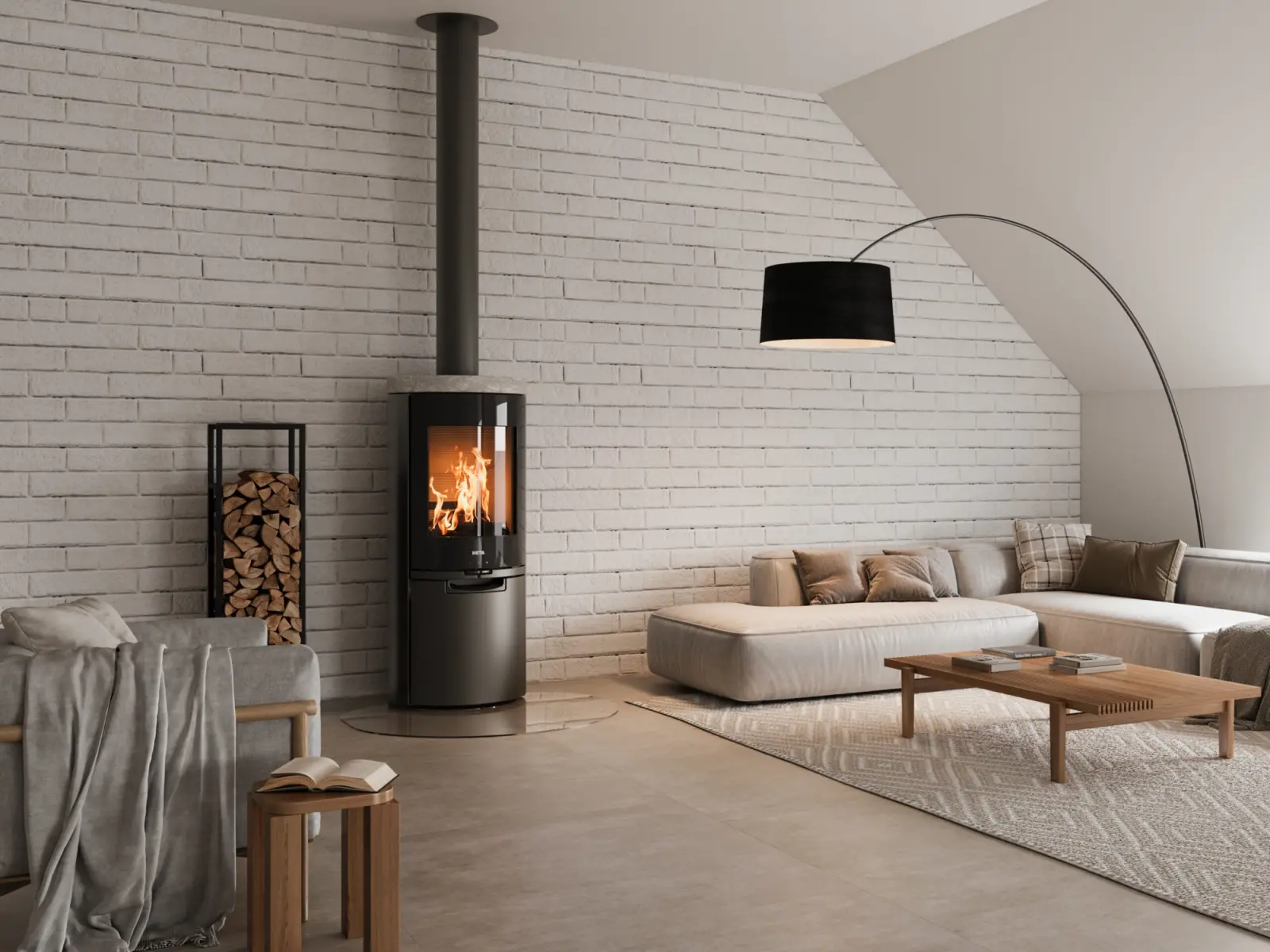
Find examples of good stoves for rooms of different sizes straight away
If you would like to take a closer look at stoves that suit your room, we have made it easy for you. On the product sheets for the individual models, we have given recommendations for the size of room our stoves should be placed in.

HETA Scan-Line 8 with soapstone – a classic wood-burning stove where the choice of material helps shape both its look and its heating properties.
The type of stove matters
Should it be a classic wood-burning stove, a pellet stove or one that runs on gas? The different types of stove have different heating properties, with advantages and disadvantages depending on what you want from your new stove.
Classic wood-burning stoves
A classic wood-burning stove is what many people prefer when they want a warm and cosy home. This type of stove gives off a relatively large amount of heat, and many models also give you a view of the fire. On the other hand, there is a little manual work involved – but that can be part of the cosiness too.
Pellet stoves
A stove that uses wood pellets can be an advantage for those who want more controllable heat. The fire can also largely look after itself compared with classic wood-burning stoves – so if you don't want to monitor the stove and tend the fire as much to achieve the output you want, a pellet stove may be the answer.
Gas stoves
Gas stoves can be the ideal solution if you want as little hassle as possible with maintenance and storing fuel. Unlike the models mentioned above, there is no ash to deal with. These are best suited to smaller rooms and to settings where atmosphere is less important.

The right heat output depends on the size of the room, the insulation of the home and how much heat you need.
Calculate the number of kW per square metre
The number of kW you need depends on whether you will use the wood-burning stove to heat your home fully or partly, or simply to enjoy the atmosphere that a fire creates. If atmosphere is the main purpose, you can of course make do with a considerably lower heat output.
Suggested wood-burning stoves for a 100 m² room
A large open room of 100 m² is a big, but not impossible, task for a single wood-burning stove. Here it will often be a good idea to choose a stove with an output of at least 5 kW – and, if the ceilings are high, preferably even more. A classic wood-burning stove that can deliver 10–14 kW is a good choice for a room of this size, but a pellet stove with specifications of around 8–12 kW is a fine alternative.
As a room of 100 m² is quite large for a wood-burning stove, you might also consider installing two smaller stoves in well-chosen places to get more even heat throughout the room.
Suggested wood-burning stoves for a 50 m² room
A room of 50 m² is a more typical size for a large living room, where a wood-burning stove can be put to good use and bring a lot of pleasure. Here it makes sense to look at models with an output of around 4–8 kW. Newer, well-insulated homes generally manage with a very low output within this range, while older brick houses should have a model from the other end of the scale. A single medium-sized wood-burning stove or a pellet stove with an output of 6–8 kW are good solutions for rooms of this size.
Suggested wood-burning stoves for a 30 m² room
A room of 30 m² typically manages with a fairly compact stove with an output of 3-5 kW. Again, insulation affects what the natural choice is – but also pay attention to the window area in the room in question, as a good deal of heat often escapes through a home's windows. Again, it is quite important to avoid a stove that is far too large, and that is why gas stoves really come into their own at this size. A smaller stove makes it much easier to create a comfortable temperature in a smaller room.
Remember that these suggestions are only illustrative examples, and as we have said, there are several different factors to take into account. If you are torn between two sizes, the best solution is often the smaller one, as from a technical perspective it is better to let a stove run at its optimum output than to keep turning the fire down. It is better for fuel economy and more beneficial for the stove's lifespan.